
Quick summary
- Start early at Tegenungan Waterfall in the south, then work your way north to Tegalalang.
- Six stops are plenty for one day. Leave room to stay longer where you like it.
- Cover shoulders and knees for the temple, and pack away sunglasses before the Monkey Forest.
- Bring cash in small notes for entrance tickets and donations.
- A private car with a local driver is 50 USD per car, not per person.
In this article
Most people who stay in Ubud ask us the same thing on their first day: where do we even start? There's a waterfall to the south, a forest full of monkeys right in the middle of town, rice terraces up the road to the north, and a temple around almost every corner. It's a lot to fit in, and the traffic doesn't make it any easier.
We drive these roads every day, and this guide is basically what we tell our guests in the car. It covers the order of stops that works best, a rough timeline, what to bring and wear, and the small things that make the day calmer, like when to visit the waterfall and how to keep your sunglasses away from the monkeys.
If you only have one free day around Ubud, this is how we would spend it.
Is one day enough for Ubud?
Honestly, no place is ever "done" in a day, and Ubud has enough cafés, galleries and walks to keep you busy for a week. But for the main sights around town, one well-planned day is enough. The waterfall, a temple, an art village, the Monkey Forest and the Tegalalang rice terraces all sit within a short drive of each other, so you can see them all without spending the whole day in the car.
What makes the difference is the order. Go the wrong way round and you'll reach the busiest places at the busiest time, then sit in traffic in between. Go the right way and the whole day feels easy.
Getting around: why a private driver helps
Ubud has no public transport that links the sights, and the roads between them are narrow, busy and sometimes steep. Scooters are popular, but if you're not used to Bali traffic, a full day of riding between villages is tiring, and it's hard to enjoy the view when you're watching the road.
Ride-hailing apps work in some places, but finding a ride back from a waterfall car park or the top of the rice terraces isn't always simple. With your own car and driver, the car waits for you at every stop, your bags stay in the car, and you leave when you're ready, not when the next ride turns up.
Our Ubud Day Tour costs 50 USD per car, not per person, so it works out well for couples, families and small groups. Entrance tickets are paid separately at each stop.
The order of stops we recommend
This is the route of our Ubud Day Tour. It starts south of Ubud and works its way north, so you never drive back and forth:
- Tegenungan Waterfall
- Pura Puseh Batuan (Batuan Temple)
- A Bali art village
- The Sacred Monkey Forest in Ubud
- Tegalalang Rice Terraces
- A jungle swing near Tegalalang
Treat it as a starting point, not a fixed plan. You can skip a stop or stay longer somewhere you love. Just tell your driver in the morning.
1. Tegenungan Waterfall: go early
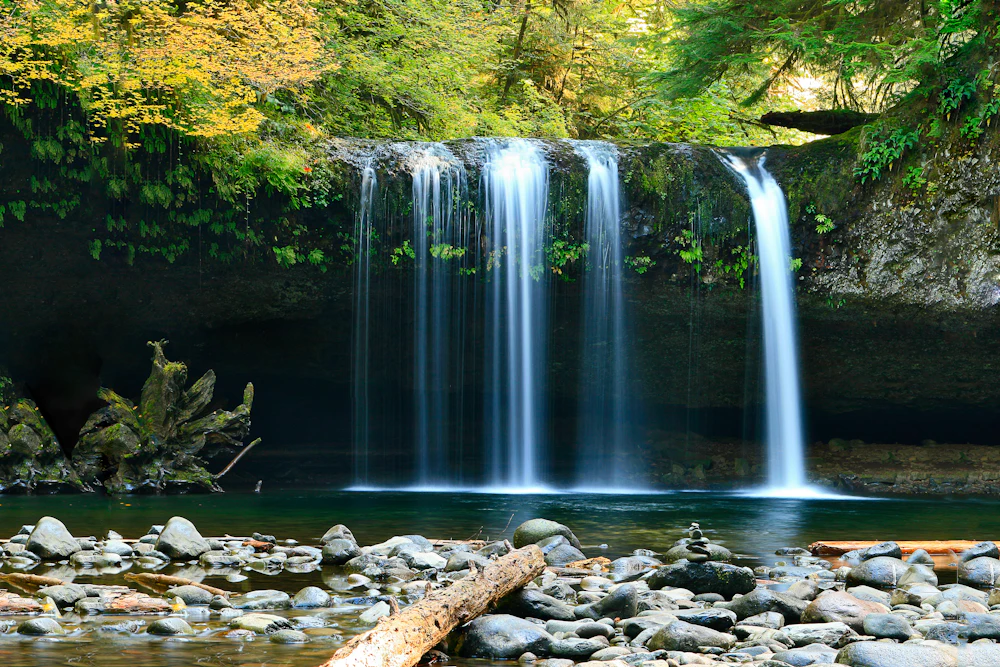
Tegenungan is a wide, powerful waterfall in a green valley south of Ubud, and it's one of the easiest waterfalls in the area to reach. That's also why it gets busy. In the morning the light is soft, the paths are quieter and it's still cool enough for the stairs.
And there are a lot of stairs. The walk down to the river is easy; the walk back up is where you'll feel it, so take your time and bring water. The rocks near the water are slippery, so wear shoes or sandals with grip instead of flip-flops.
Whether you can swim depends on the river. After heavy rain the water runs fast and brown, and swimming may not be allowed. If you'd like to get in, bring a swimsuit and a small towel, and listen to the staff on the day.
2. Batuan Temple: dress for it
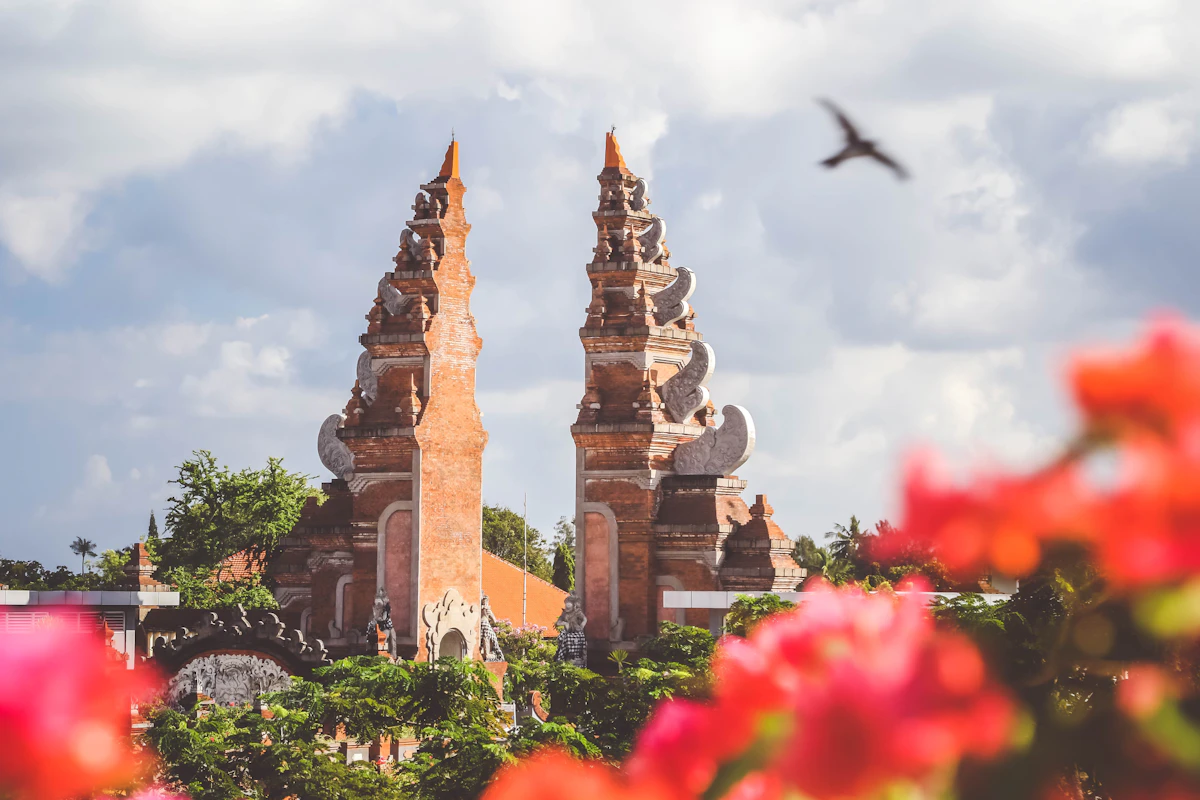
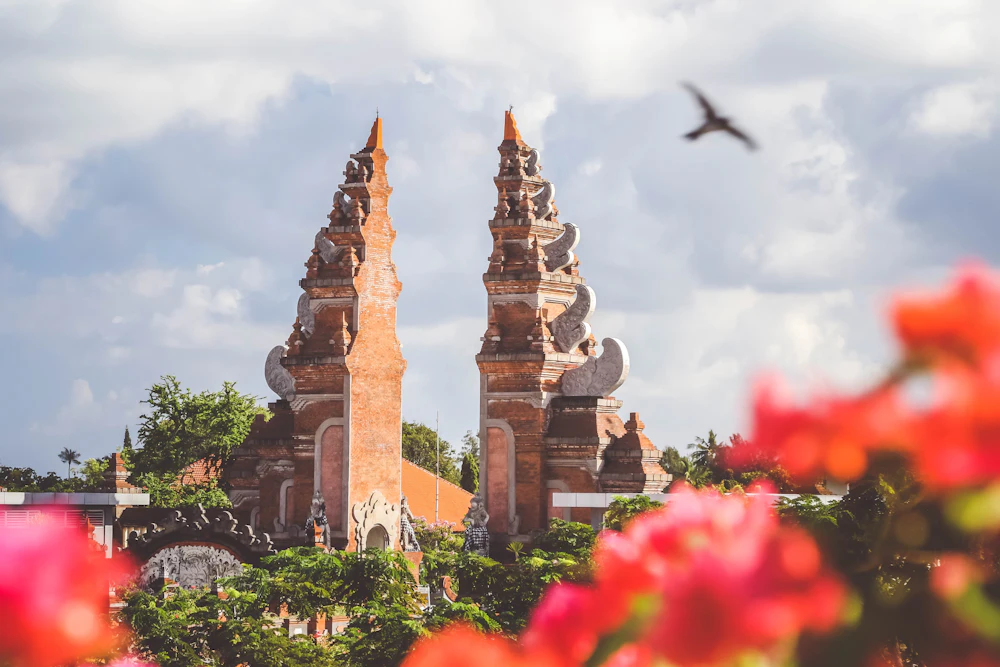
Pura Puseh Batuan is an old village temple known for its stone carvings: tall gates, guardian figures and walls covered in fine detail. It's smaller and calmer than the famous temples on the coast, which is exactly why we like it.
Remember that Balinese temples are places of prayer first and sights second. Cover your shoulders and knees, keep your voice down and don't climb on walls or shrines. Sarongs are usually available at the entrance and simply wrap over what you're wearing. If a ceremony is going on, you're welcome to watch from the side, but don't walk in front of people who are praying.
One small thing: you'll see little palm-leaf trays with flowers and rice on the ground, in front of shops and gates. These are offerings called canang sari. Try not to step on them.
3. A Bali art village
The villages around Ubud each have their own craft. Batuan is known for its detailed painting style, Mas for woodcarving and Celuk for silver. A stop at a workshop is a nice way to see the work up close, like a carver finishing a mask or a painter filling a whole canvas with tiny brushstrokes.
You don't have to buy anything. If something catches your eye, it's normal to ask for a better price, politely and with a smile. And if shopping isn't your thing, tell your driver and you'll have more time at the next stop.
4. The Monkey Forest: keep your bag zipped
The Sacred Monkey Forest Sanctuary sits right in the middle of Ubud: huge old trees, moss-covered statues, three temples and a lot of long-tailed macaques. It's shady and cool under the trees, which feels very good around midday.
The monkeys are used to people, but they're wild animals and very good thieves. Before you walk in:
- Put sunglasses, hats and earrings in your bag, and zip it up.
- Don't bring food or plastic bags, even empty ones. The monkeys know that sound.
- Don't feed or touch the monkeys, and don't stare them in the eye.
- If a monkey grabs something, don't pull it back. Stay calm and call a staff member.
Small children can find the monkeys a little too close for comfort, so keep them near you. Stay on the paths, follow the signs, and you'll be fine.
5. Tegalalang Rice Terraces: walk down, don't just look
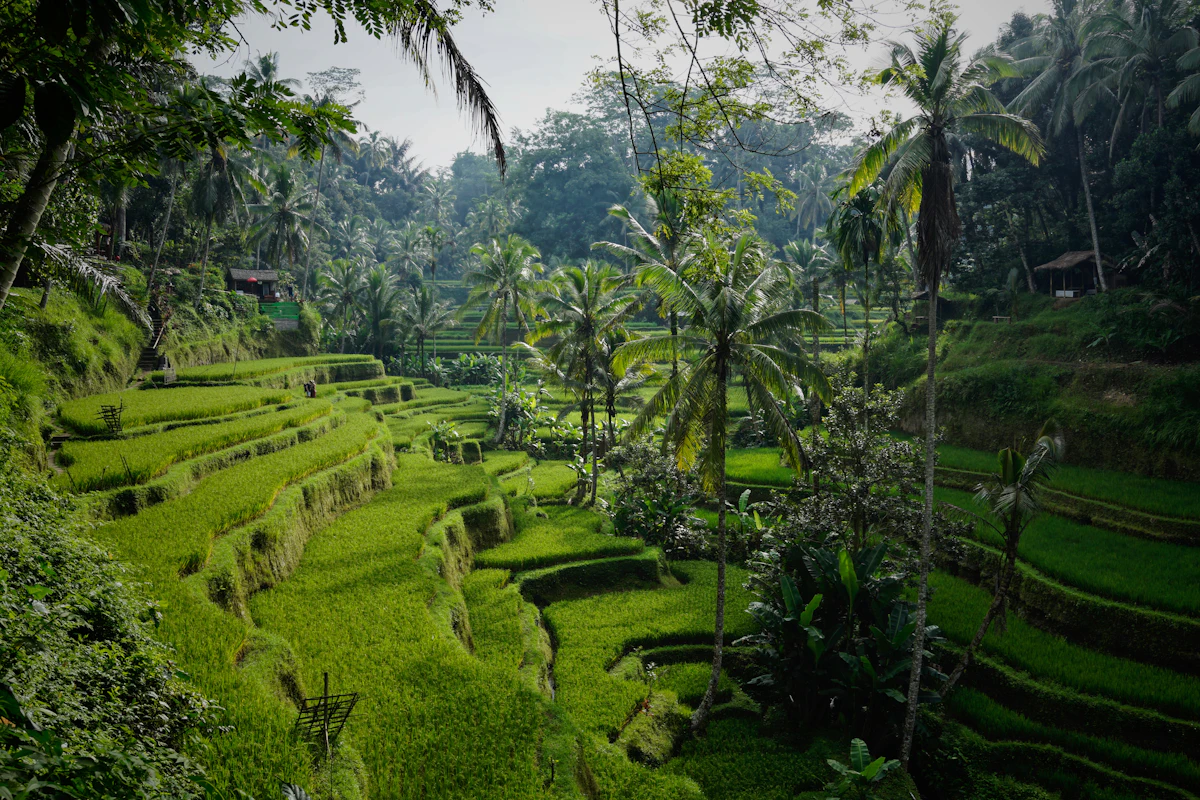
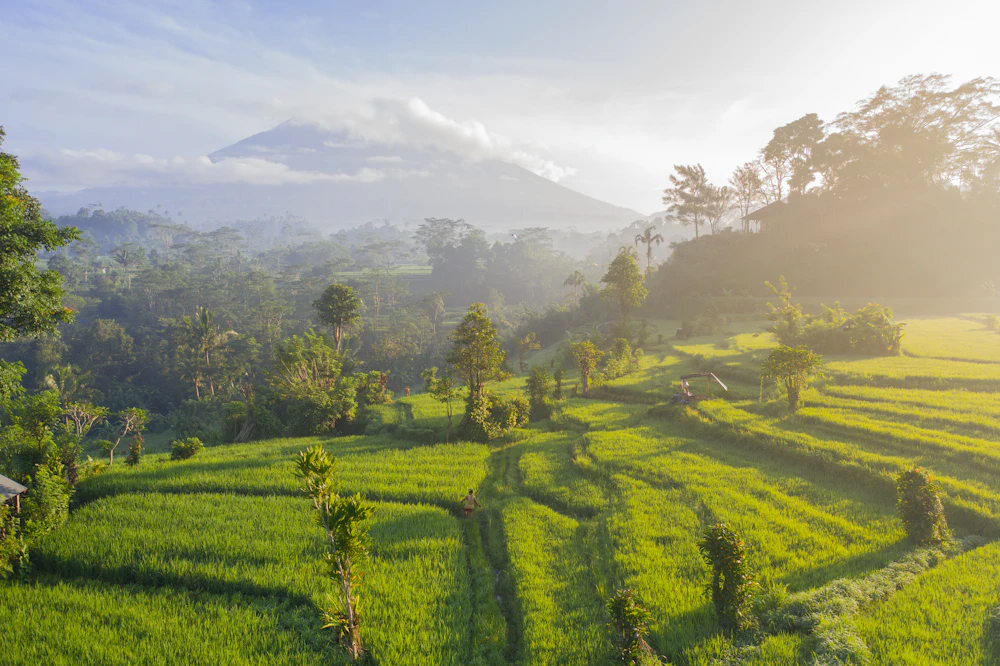
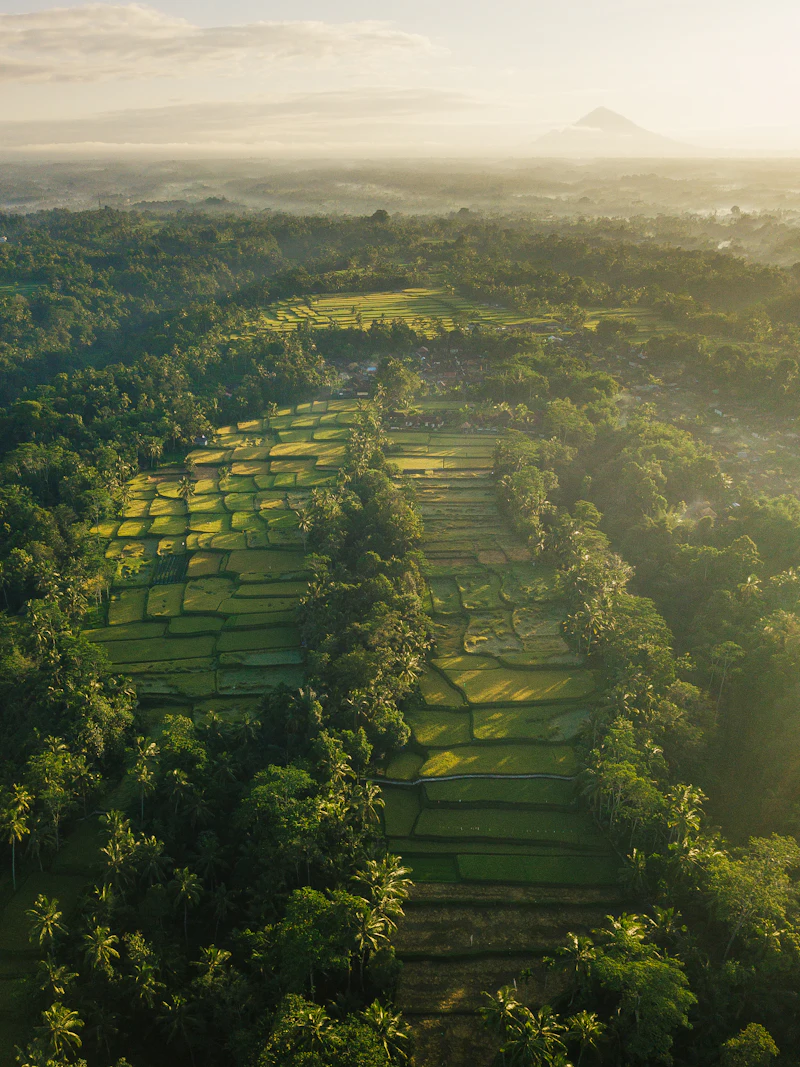
Tegalalang, north of Ubud, is the rice terrace view you've probably already seen in photos: steep green steps curving down into a valley, with coconut palms on top. Many people stop at a café on the road, take a picture and leave. If you have the energy, walk down into the terraces instead. It's quieter at the bottom, and you can see how the water moves from one field to the next.
That water system is called subak, a centuries-old way for farmers to share water, closely tied to the temples. The fields are private land worked by local families, so stay on the paths. You may be asked for a small donation at a few points along the way; it goes to the people who keep the terraces looking like this.
The paths are narrow and can be muddy after rain, so watch your step while you're busy taking photos. There are plenty of cafés with a view along the road, which makes Tegalalang an easy place to stop for lunch.
6. The jungle swing: optional, but fun
There are several swing parks around Tegalalang where you swing out over the valley on a long rope. It's a fun way to end the day, and yes, it makes a great photo. Prices and packages are different at each place, so ask what's included before you pay, such as the number of swings, photos or a drink.
Wear clothes you can move in, and follow the staff's safety instructions. If heights aren't your thing, skip it and spend the extra time in the rice fields or back in town.
Our honest tip: don't try to see everything. The best part of the day is often the extra twenty minutes you spend somewhere you didn't plan to stay.
A rough timeline for the day
Every day is a little different, but if you leave around 8 in the morning, it often looks something like this:
- 8:00 Pickup from your hotel or villa
- 8:30 Tegenungan Waterfall, before the crowds
- 10:30 Batuan Temple
- 11:15 An art village workshop
- 12:15 The Monkey Forest, nice and shady at midday
- 13:30 Lunch with a view near Tegalalang
- 14:30 A walk through the rice terraces
- 15:30 Jungle swing, if you like
- 17:00 Back at your hotel
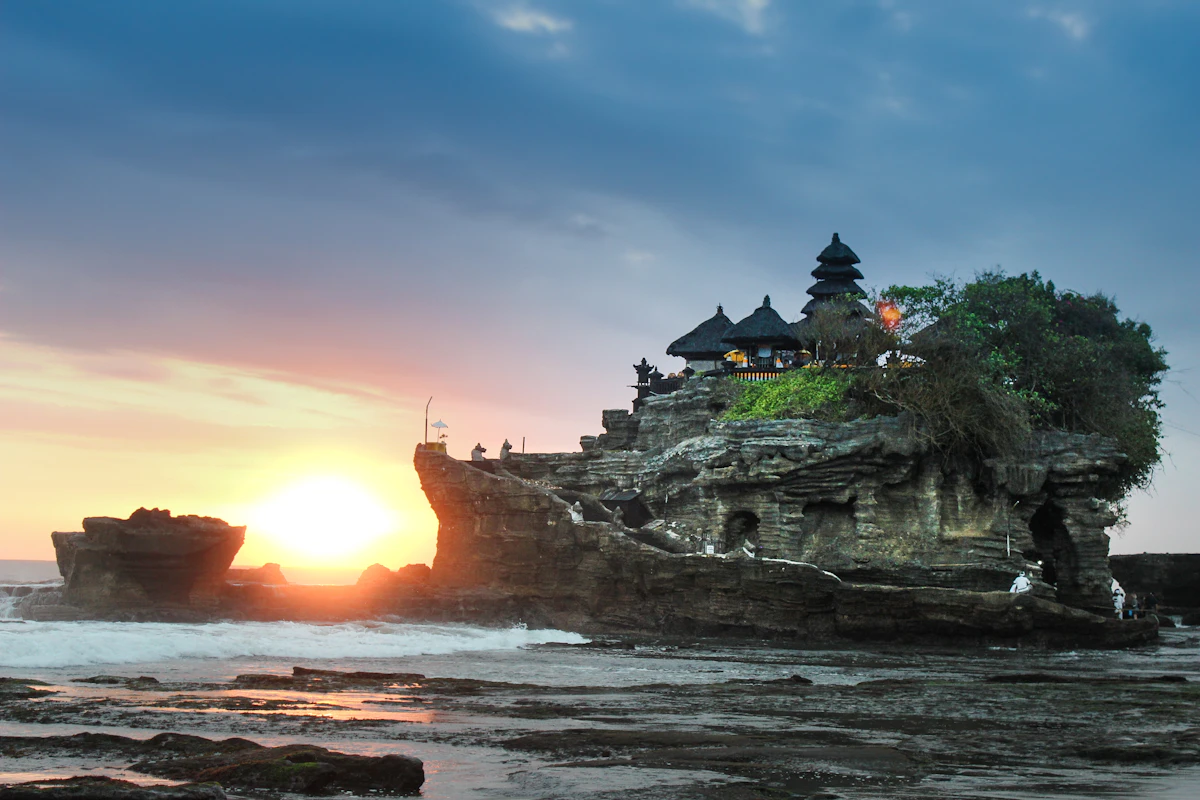
These times are only a guide. We agree the pickup time with you when you book, and traffic in and around Ubud can add time, especially in the afternoon. So don't plan anything tight for the evening. If you'd love to see a sunset over the ocean, keep it for another day, for example on our Tanah Lot sunset tour.
What to bring and wear
Pack light, but don't forget these:
- Water. You'll walk and climb more than you expect.
- Sunscreen, a hat and sunglasses (packed away at the Monkey Forest).
- Shoes with grip for the waterfall stairs and the rice terrace paths.
- Cash in rupiah, in small notes.
- A scarf or light shirt to cover your shoulders at the temple.
- A swimsuit and small towel if you want to swim at the waterfall.
- A light rain jacket in the wet season.
- A bag that zips shut, not an open tote.
As for clothes, light and breathable is best. It's warm and humid most of the year, even in the morning. Leave the white trousers at the hotel: between the waterfall spray, the mud on the terrace paths and the odd shower, they won't stay white for long. Flip-flops are fine in the car, but not on the stairs at Tegenungan.
When to go, and what if it rains
Bali has two main seasons. From around April to October it's drier and sunnier, which is great for photos and walking. From around November to March is the wet season. That usually means a heavy shower in the afternoon rather than rain all day, and it's when the rice fields and waterfalls look their greenest and fullest.
If it rains, the day still works. Start early, do the outdoor stops in the morning, and save the Monkey Forest (under the trees) or the art village for later. After a storm the river at Tegenungan can be too strong for swimming, so don't count on a swim in the wet season.
Weekends and Indonesian public holidays bring more local visitors, so an early start matters even more on those days.
Money, tickets and small costs
Most stops have their own entrance ticket, and these aren't included in the car price, so bring some cash. Ticket prices change from time to time, so we won't list them here; your driver can tell you what to expect on the day. Card payment is becoming more common, but small stalls, donations and toilets are usually cash only.
Small notes help a lot. Breaking a big note at a little stall halfway down the rice terraces isn't easy.
Mistakes we see a lot
- Planning too many stops. Six is plenty for one day; ten is a day spent in the car.
- Arriving at Tegenungan or Tegalalang around noon, together with everyone else.
- Walking into the Monkey Forest with sunglasses on your head.
- Forgetting something to cover your shoulders for the temple.
- Booking an early dinner on the other side of the island.
- Not drinking enough water. The heat sneaks up on you.
Want a different kind of day?
The Ubud route is a great first day, but it's not the only way to see this part of Bali. If waterfalls are your favourite, our waterfall tour visits more of them. If you'd rather finish the day by the sea, look at the Tanah Lot sunset tour or the Uluwatu sunset tour. For lakes, mountains and quieter roads, try our North Bali trips or the East Bali tour.
Already have your own list of places? Send it to us and we'll turn it into a custom tour. You can also see all our tours in one place.
Quick answers
Is the 50 USD per person?
No. The Ubud Day Tour is 50 USD for the whole car, not per person.
Are entrance tickets included?
No. Entrance tickets are paid separately at each stop.
Can we change the stops?
Yes. The route is flexible, so you can skip a stop or stay longer where you like. If you'd like to add a different place, just ask us when you book.
Is this day OK for kids?
For the most part, yes. Keep small children close at the Monkey Forest and on the waterfall stairs, and check the rules at the swing park, as each place sets its own.
Which day of the week is best?
Weekdays are usually a bit calmer than weekends. But honestly, starting early makes a bigger difference than the day you pick.
How to book your Ubud day
Send us a message on WhatsApp with your date, where you're staying and how many people are coming. Let us know if there's anything you'd like to add or skip. We'll reply to confirm your day and pickup time, and your driver will meet you at your hotel or villa.
That's it. See you in Ubud!
Plan your Ubud day with a local driver
Tell us your date, where you stay and what you'd love to see. We'll suggest an easy order of stops and confirm everything on WhatsApp.
Chat on WhatsApp
Ubud driver team
We're local drivers from Ubud. This guide is what we usually share with guests in the car, written down so you can plan your day before you arrive.